Classic Adventure Novels for Readers Who Love Action
Think classic literature is all drawing rooms and moral lessons? These adventure novels offer sword fights, shipwrecks, daring escapes, and nonstop excitement.
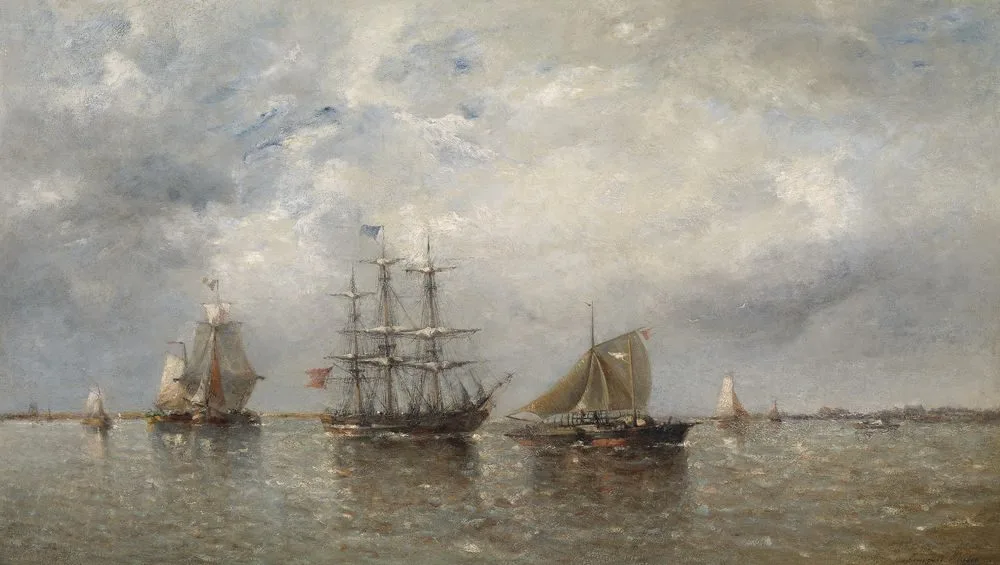
Classic literature has a reputation for being slow, introspective, and quietly serious. And while the canon certainly includes its share of contemplative masterpieces, it is also home to some of the most thrilling, pulse-pounding adventure stories ever written. Long before Hollywood blockbusters and video games, novelists were crafting tales of treasure hunts, sea voyages, prison escapes, and battles that kept readers turning pages late into the night.
If you love action, suspense, and high-stakes storytelling, these classic adventure novels prove that great literature and great entertainment are not mutually exclusive. Many of these titles also appear on our essential classics list, because the best adventure novels do more than thrill—they explore the limits of human courage and ingenuity.
Treasure Island by Robert Louis Stevenson (1883)
The adventure novel that set the template for every pirate story that followed. Young Jim Hawkins discovers a treasure map among a dead sailor's possessions and sets sail aboard the Hispaniola, only to discover that the ship's cook, Long John Silver, is leading a mutiny. Stevenson's pacing is relentless, and Silver—charming, treacherous, and oddly likable—is one of the great villains in all of fiction. Treasure Island is the rare classic that reads as fast as a modern thriller.
The Count of Monte Cristo by Alexandre Dumas (1844)
Dumas's masterpiece is a sprawling epic of betrayal, imprisonment, and meticulously planned revenge. Edmond Dantès, a young sailor falsely imprisoned in the Château d'If, escapes after fourteen years, discovers a vast fortune, and reinvents himself as the mysterious Count of Monte Cristo to systematically destroy the men who ruined his life. At over a thousand pages in its unabridged form, it is a commitment—but the payoff is enormous. Every subplot converges with clockwork precision, and the moral questions Dumas raises about justice versus vengeance give the story lasting depth.
The Three Musketeers by Alexandre Dumas (1844)
Published the same year as Monte Cristo, Dumas's tale of the young Gascon d'Artagnan and his three inseparable companions—Athos, Porthos, and Aramis—is the quintessential swashbuckler. Sword fights, political intrigue, romance, and a memorably villainous Milady de Winter make this one of the most purely entertaining novels ever written. The camaraderie among the musketeers has become a cultural archetype, and the novel's famous motto—all for one, one for all—endures in the popular imagination.
Robinson Crusoe by Daniel Defoe (1719)
Often cited as the first English novel, Robinson Crusoe is the original survival story. After a shipwreck leaves him stranded on a deserted island, Crusoe must build shelter, find food, and fend off threats using nothing but his wits and whatever he can salvage from the wreck. Defoe's meticulous attention to the practical details of survival gives the novel a documentary realism that has influenced adventure fiction for three centuries, from The Swiss Family Robinson to modern survival narratives.
The Call of the Wild by Jack London (1903)
Jack London's short, ferocious novel follows Buck, a domesticated dog stolen from a California ranch and thrust into the brutal world of the Yukon Gold Rush as a sled dog. The story is one of survival, adaptation, and the primal instincts that lie beneath the surface of civilization. London's prose is muscular and visceral, and the novel moves at a breakneck pace. At under 200 pages, it is also one of the short classics you can read in a weekend.
Around the World in Eighty Days by Jules Verne (1872)
Jules Verne's most famous novel follows the unflappable Phileas Fogg and his resourceful valet Passepartout as they attempt to circumnavigate the globe in eighty days to win a wager. The journey takes them by steamship, train, elephant, and sailing vessel through India, Hong Kong, Japan, and across the American frontier. Verne's genius lies in combining genuine geographic and technological detail with a story that never stops moving. It is a celebration of human ingenuity and the sheer thrill of the journey.
The Last of the Mohicans by James Fenimore Cooper (1826)
Set during the French and Indian War, Cooper's novel follows the scout Natty Bumppo (known as Hawkeye) and his Mohican companions Chingachgook and Uncas through the forests of colonial New York. The novel is filled with ambushes, rescues, chases, and battles, and its depiction of the American wilderness was enormously influential. While Cooper's prose style has its detractors, the story's momentum and its themes of cultural collision and frontier loyalty continue to captivate readers.
Why Adventure Classics Still Matter
The best adventure novels do more than provide escapism. They test their characters against extreme circumstances and reveal what those characters are truly made of. They explore questions of loyalty, courage, justice, and the limits of human endurance in settings that make those questions urgent and visceral. In an era of CGI spectacle, there is something irreplaceable about the way a great novel drops you inside a character's experience and lets you feel the danger, the exhaustion, and the triumph alongside them.
Getting Started with Adventure Classics
If you are new to classic adventure fiction, Treasure Island and The Call of the Wild are ideal starting points—both are short, fast-paced, and written in prose that remains highly readable today. From there, the sprawling plots of Dumas and the inventive journeys of Verne offer progressively more immersive experiences. And if the language of older adventure novels occasionally feels like a barrier, a modernized edition can clear the path so you can focus on the action and storytelling that make these books timeless.


