A Reader's Guide to Pride and Prejudice
Jane Austen's Pride and Prejudice remains one of the most beloved novels in the English language. This guide explores the Bennet family dynamics, Darcy's transformation, Regency social customs, and the razor-sharp irony that makes Austen's prose endlessly re-readable.
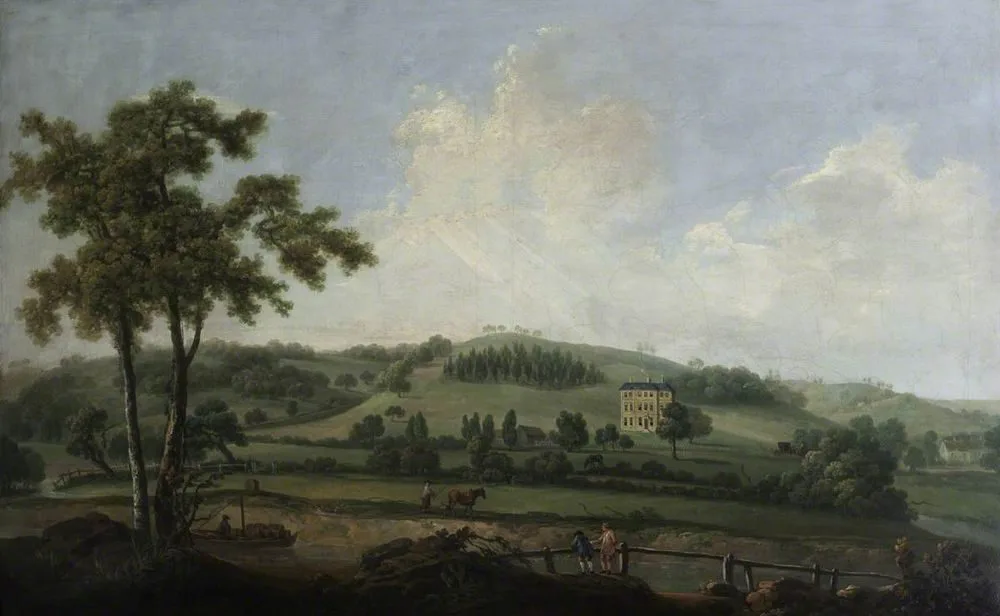
First published in 1813, Pride and Prejudice has never gone out of print. Jane Austen's story of Elizabeth Bennet and Fitzwilliam Darcy has been adapted into films, television series, and even zombie mashups, yet the original novel remains sharper and funnier than any adaptation can fully convey. The book operates on two levels simultaneously: it is a deeply satisfying romance, and it is a precise social satire of the English landed gentry at the turn of the nineteenth century.
The Bennet Family: Comedy and Anxiety
The novel revolves around the five Bennet sisters — Jane, Elizabeth, Mary, Kitty, and Lydia — and the urgent question of their futures. Because the Bennet estate is entailed to a male heir (the insufferable Mr. Collins), the sisters have no financial security unless they marry well. Mrs. Bennet's frantic matchmaking, which readers often find comic, is rooted in genuine economic desperation. Mr. Bennet retreats into his library and his wit, preferring to laugh at the world rather than engage with it. Understanding this tension between comedy and real stakes is essential to appreciating Austen's achievement. She never lets the reader forget that for women of this era, marriage was not merely romantic — it was survival.
Elizabeth and Darcy: Pride Meets Prejudice
Elizabeth Bennet is one of literature's most appealing heroines: intelligent, witty, independent, and confident in her own judgment. That confidence, however, is also her flaw. She prides herself on reading people accurately, and when Darcy slights her at the Meryton ball, she forms a prejudice that colors every subsequent encounter. Darcy, meanwhile, is genuinely proud — not merely shy, as some adaptations suggest, but convinced of his social superiority. Austen structures the novel so that both characters must recognize their own failings before they can come together. Darcy's letter to Elizabeth after her refusal of his first proposal is the turning point of the book, and one of the most brilliantly constructed scenes in English fiction.
I have been a selfish being all my life, in practice, though not in principle.
Regency Social Customs You Should Know
Modern readers sometimes miss nuances that Austen's original audience would have understood instantly. A few key points help unlock the social world of the novel. First, income figures matter enormously. When Austen tells us Darcy has ten thousand pounds a year and Mr. Bingley has five thousand, she is communicating precise social rank. Second, dances were among the few socially sanctioned opportunities for young men and women to interact, which is why so much drama unfolds at balls. Third, reputation was fragile and could be destroyed by a single scandal — Lydia's elopement with Wickham is not merely embarrassing but potentially ruinous for the entire family. Fourth, letters were a primary means of communication, and Austen uses them not just as plot devices but as windows into character.
Austen's Irony: Reading Between the Lines
The famous opening sentence — about a single man in possession of a good fortune — is often quoted as a straightforward statement. In fact, it is pure irony. Austen is not describing a universal truth; she is skewering the assumptions of a society that reduces people to their bank accounts. This kind of free indirect discourse, where the narrator's voice blends with the characters' thoughts, runs throughout the novel. When Austen writes that Mr. Collins was "not a sensible man," the understatement is devastating. Learning to hear Austen's ironic voice — the gap between what is said and what is meant — is the single greatest key to enjoying her work.
Tips for Getting the Most from Your Reading
- Read slowly enough to catch the irony. Austen packs enormous meaning into short, apparently simple sentences.
- Pay attention to dialogue. Austen reveals character almost entirely through conversation and letters, not physical description.
- Notice who is observing whom. The novel is filtered largely through Elizabeth's perspective, and her biases shape what the reader sees.
- Consider the minor characters. Mr. Collins, Lady Catherine de Bourgh, and Charlotte Lucas all illuminate the novel's themes in important ways.
- Re-read the first proposal scene and Darcy's letter together. The emotional architecture of the entire novel hinges on these two chapters.
Pride and Prejudice rewards every re-reading with new discoveries. If you enjoy Austen's social acuity, you may also appreciate our guide to Jane Eyre, another landmark of women's fiction from the same era. For more classic literature recommendations, visit our book catalog.

