A Reader's Guide to The Picture of Dorian Gray
Oscar Wilde's only novel is a dazzling and disturbing meditation on beauty, morality, and art. This guide unpacks its philosophy, its scandalous publication history, and the symbols that make it endure.
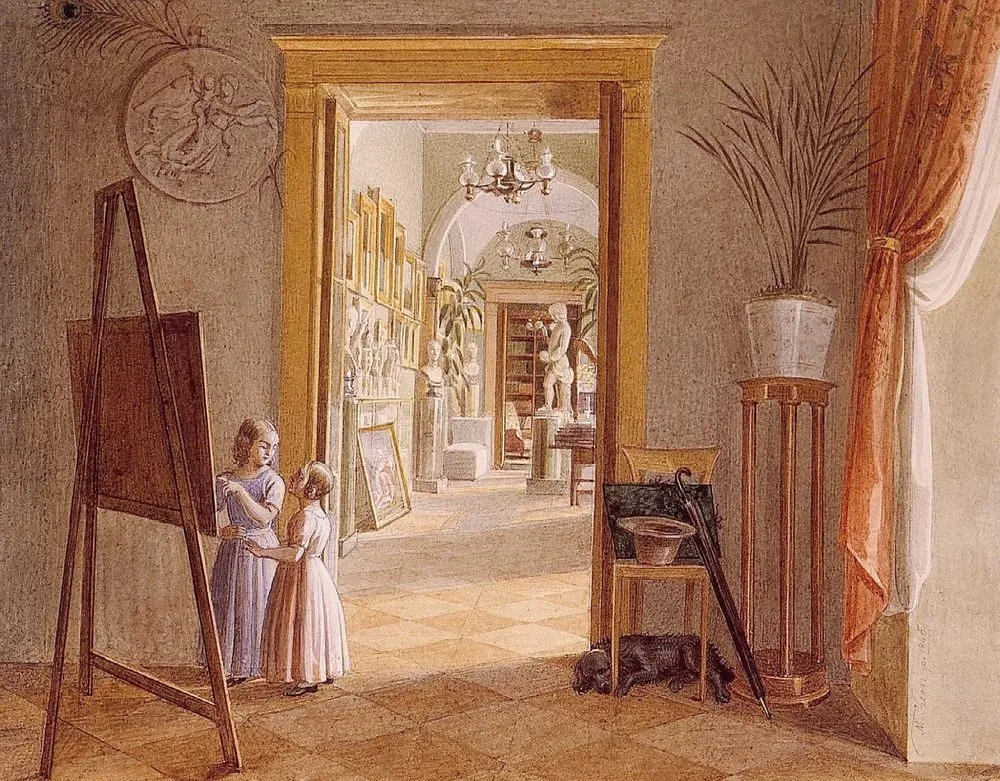
The Picture of Dorian Gray is Oscar Wilde's only novel, and it caused an immediate scandal when it appeared in 1890. Critics called it immoral, poisonous, and unfit for public consumption. Wilde responded with a revised and expanded edition in 1891, adding a preface that became one of the most quoted manifestos in literary history. The novel tells the story of a beautiful young man whose portrait ages and corrupts in his place while he remains eternally youthful. Beneath this gothic premise lies a searching debate about art, ethics, and influence that remains remarkably relevant.
Aestheticism and Wilde's Philosophy
Wilde was a leading figure in the Aesthetic Movement, which held that art exists for its own sake, not to serve moral or social purposes. The novel's preface declares this position boldly. Yet the story itself complicates that stance. Dorian pursues a life of pure sensation and aesthetic pleasure, following Lord Henry's philosophy to its logical end, and the result is spiritual ruin. Wilde gives the reader an elegant paradox: a novel about the beauty of art that simultaneously dramatizes the dangers of treating life as nothing more than art. Understanding this tension is essential. Wilde is not simply endorsing Lord Henry's witticisms; he is testing them against lived consequences.
The Censorship History
The original magazine version published in Lippincott's Monthly Magazine was edited by the publisher without Wilde's full consent, removing passages deemed too explicitly homoerotic. When Wilde prepared the 1891 book edition, he added six new chapters and the famous preface but also softened some language. Modern readers now have access to both the 1890 and 1891 texts. The uncensored 1890 version is shorter and rawer; the 1891 version is more polished and philosophically explicit. Reading both is illuminating, but if you choose one, the 1891 edition is Wilde's intended final form.
Lord Henry Wotton's Influence
Lord Henry is one of the great tempters in English fiction. His epigrammatic speeches are endlessly quotable, and therein lies their danger — both for Dorian and for the reader. Lord Henry treats conversation as performance and people as experiments. He plants the idea in Dorian that youth is the only thing worth having, and he watches with detached amusement as Dorian acts on that belief. Wilde modeled aspects of Lord Henry on himself, but he also recognized the cruelty in that kind of detachment. Pay attention to what Lord Henry does not say and does not do; his influence is always indirect, delivered through suggestion rather than command, making him harder to hold accountable.
The books that the world calls immoral are books that show the world its own shame.
The Portrait as Symbol
The portrait painted by Basil Hallward functions on multiple symbolic levels. Most obviously, it represents Dorian's conscience — the visible record of sins his face refuses to show. It also represents the relationship between an artist and his subject; Basil admits he has put too much of himself into the painting, and that confession foreshadows his fate. On a broader level, the portrait asks whether art can contain moral truth even when the artist and his philosophy deny that art has moral responsibilities. When Dorian finally slashes the canvas, he is not merely destroying evidence; he is attempting to sever the last connection between his actions and their meaning. That the act destroys him rather than freeing him is Wilde's most devastating judgment.
Reading Dorian Gray Today
Modern readers often come to the novel knowing its premise and its author's tragic biography. Try, if you can, to let the text surprise you on its own terms. The middle chapters, where Dorian catalogues his obsessions with jewels, perfumes, and music, can feel like digressions, but they mirror his desperate attempt to fill an inner emptiness with external beauty. The novel rewards slow reading, particularly in its dialogue scenes, where Wilde layers irony upon irony. For a deeper appreciation of Wilde's world, pair this novel with our guide to Oscar Wilde, or explore how other Victorian writers grappled with morality in our guide to Jane Eyre.
