An Introduction to Modernist Literature
Modernist literature shattered the conventions of storytelling in the early twentieth century. This guide explores its revolutionary techniques, key authors, and lasting influence on fiction and poetry.
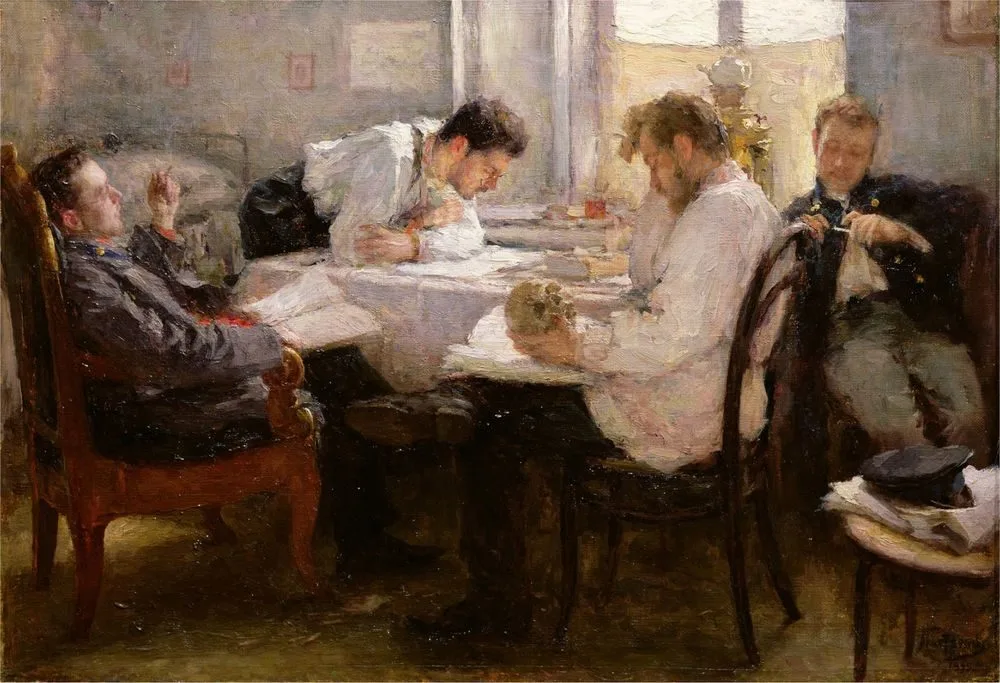
Literary modernism was the most radical artistic revolution of the twentieth century. In the years surrounding the First World War, writers across Europe and America broke with the conventions of realist fiction and traditional poetry, forging new forms to capture the fragmented, disorienting experience of modern life. The result was some of the most challenging and rewarding literature ever produced.
Why Modernism Happened
Modernism emerged from a profound sense that the old ways of representing reality were no longer adequate. The catastrophe of World War I shattered faith in progress and rational civilization. Freud's theories of the unconscious revealed that the mind was far stranger and less unified than the Victorians had assumed. Einstein's relativity, new technologies of communication and transportation, and the accelerating pace of urban life all contributed to a feeling that the world had fundamentally changed and that art must change with it.
Stream of Consciousness and the Inner Life
The signature technique of modernist fiction is stream of consciousness: the attempt to represent the continuous flow of a character's thoughts, perceptions, and associations directly on the page. Virginia Woolf developed the method with luminous subtlety in Mrs Dalloway (1925) and To the Lighthouse (1927). James Joyce pushed it to its most extreme expression in Ulysses (1922), whose final chapter presents Molly Bloom's unpunctuated inner monologue in a torrent of sensation and memory.
Joyce and the Revolution of the Novel
James Joyce (1882-1941) is the central figure of literary modernism. His short-story collection Dubliners (1914) introduced the concept of the epiphany — a sudden moment of insight that illuminates an ordinary situation. A Portrait of the Artist as a Young Man (1916) traced the development of an artistic consciousness with increasing stylistic experimentation. Ulysses (1922) reimagined Homer's Odyssey as a single day in Dublin, deploying a dazzling variety of styles and techniques that redefined what the novel could do.
Eliot, Pound, and Modernist Poetry
T.S. Eliot's The Waste Land (1922) is the defining poem of the modernist era. A fragmented, allusive collage of voices, languages, and literary references, it captures the spiritual desolation of postwar Europe with an intensity that stunned contemporary readers. Ezra Pound, Eliot's editor and fellow revolutionary, championed the Imagist movement and produced his own modernist epic in The Cantos. Together, Eliot and Pound reshaped English-language poetry as decisively as Joyce reshaped the novel.
Kafka and the Literature of Alienation
Franz Kafka (1883-1924) created a uniquely disturbing fictional world in which the logic of dreams invades everyday reality. The Metamorphosis (1915) opens with its protagonist transformed into a giant insect and proceeds with deadpan precision. The Trial (1925) and The Castle (1926), both published posthumously, present nightmarish visions of bureaucratic absurdity and existential helplessness. Kafka's influence on twentieth-century literature is so pervasive that "Kafkaesque" has entered the common vocabulary.
Modernism's Legacy
Modernism transformed the possibilities of literature permanently. Stream of consciousness, fragmented narrative, unreliable narration, and the dissolution of linear chronology are now standard tools in the novelist's repertoire. Even writers who work in broadly realist modes are working within a landscape that modernism fundamentally reshaped. The movement's insistence that form must be as innovative as content remains one of the most important artistic principles of the modern age.
