An Introduction to Realism in Literature
Literary realism rejected Romantic idealization in favor of honest, detailed portrayals of everyday life. This guide introduces the movement's origins, key authors, and lasting significance.
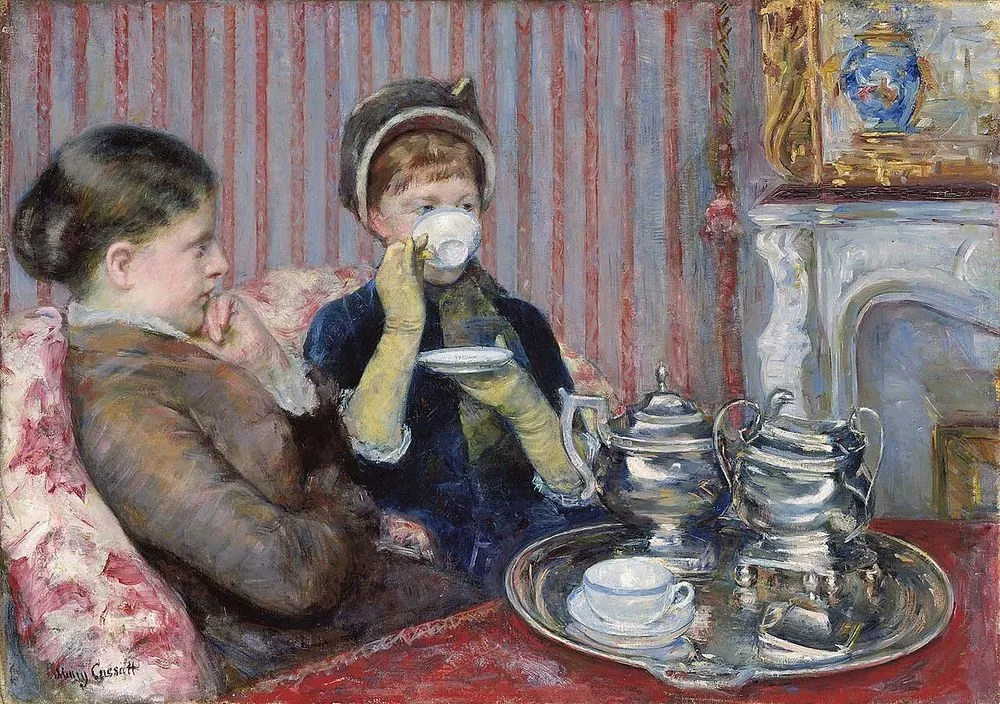
Literary realism was the dominant mode of Western fiction in the second half of the nineteenth century. Rejecting the heightened emotions and idealized settings of Romanticism, the realists sought to depict ordinary life as it was actually lived, with careful attention to social conditions, psychological motivation, and the texture of everyday experience. The movement produced some of the greatest novels ever written and established conventions that still shape fiction today.
Origins and Principles
Realism emerged in France in the 1830s and 1840s, partly as a response to the perceived excesses of Romantic fiction. Where the Romantics favored exotic settings, extraordinary characters, and intense emotion, the realists turned to the familiar: the drawing room, the marketplace, the provincial town. They aimed to observe society with the objectivity of a scientist, presenting characters shaped by their environment, class, and economic circumstances rather than by destiny or divine will.
Balzac and Flaubert
Honoré de Balzac is often considered the father of literary realism. His vast Comédie humaine — a cycle of interconnected novels covering every stratum of French society — pioneered the detailed, sociological approach to fiction that defined the movement. Gustave Flaubert refined Balzac's methods with a new emphasis on artistic discipline and impersonal narration. Madame Bovary (1857), with its pitiless dissection of provincial mediocrity and romantic self-delusion, became the exemplary realist novel.
George Eliot and English Realism
In England, George Eliot brought philosophical depth to the realist novel. Middlemarch (1872) portrays the interconnected lives of a Midlands community with an intelligence and moral seriousness that few novels have matched. Eliot combined keen social observation with a profound sympathy for her characters' inner struggles, creating fiction that is simultaneously panoramic and deeply intimate. Anthony Trollope and Elizabeth Gaskell further enriched the Victorian realist tradition with their detailed portraits of English social life.
Tolstoy and Russian Realism
The Russian literary tradition produced some of the most powerful works of realism. Leo Tolstoy's War and Peace and Anna Karenina combine panoramic social scope with minute psychological observation, achieving a breadth and depth that many consider the summit of the realist novel. Ivan Turgenev's Fathers and Sons and Dostoevsky's urban novels also contribute to the realist tradition, though Dostoevsky's intensity of vision often pushes beyond conventional realism into something more extreme.
American Realism: Twain and James
In America, Mark Twain and Henry James represent two contrasting approaches to realism. Twain's Adventures of Huckleberry Finn (1884) captures the rhythms of American vernacular speech and confronts the realities of slavery and racial prejudice with a moral honesty that shocked many readers. James, by contrast, focused on the psychology of the upper classes, creating intricately observed novels like The Portrait of a Lady (1881) and The Ambassadors (1903) that explore the subtleties of consciousness and social convention.
Legacy and Influence
Realism never truly ended; it evolved. The movement's commitment to accurate social observation and psychological truth became the default mode of serious fiction in the twentieth century. Naturalism pushed realism's methods to extremes, while modernism challenged its assumptions about narrative and representation. But the realist novel's fundamental ambition — to hold a mirror up to the world as it actually is — remains the foundation on which most fiction is built.
