Why These Books Are Illustrated With Paintings
An illustration drawn for a novel tells you what the illustrator thought of it. A painting made in the same years tells you what the world outside the novel actually looked like — and it never argues with your own reading.
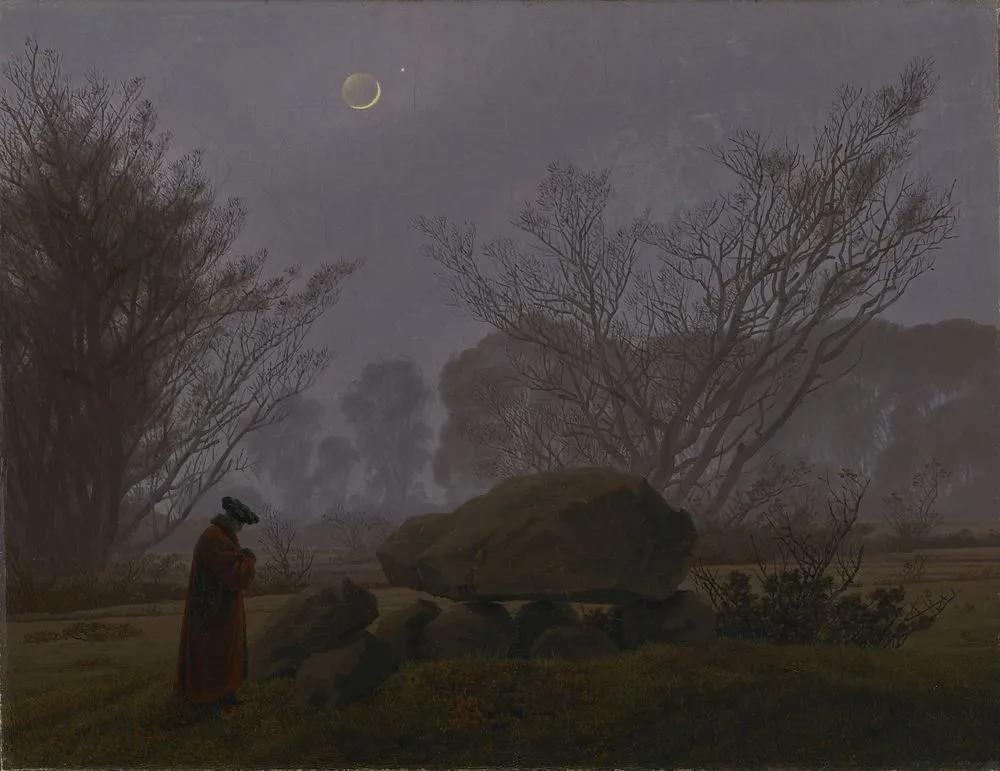
Most illustrated classics are illustrated with drawings made for the book. There is nothing wrong with that, and some of it is very fine, but it has a cost that is rarely admitted: a drawing made for a novel is an argument about the novel. It fixes a face. It decides that Heathcliff looked like this and not like that, and once you have seen it, you cannot unsee it. The illustrator has read the book on your behalf.
These editions are illustrated with paintings instead — pictures made in the same decades as the books, by painters who had never heard of them. They show the same weather, the same rooms, the same roads, the same quality of light. They do not tell you what a character looked like, because they were not painted to.
The world the book took for granted
A nineteenth-century novelist could write "the coach came up the drive at dusk" and rely on every reader knowing what that meant: the height of the wheels, the colour of the light, how much of the house you could see. A reader now supplies that from films, which is to say from other people's reconstructions.
A painting made in 1840 supplies it from life. It is the only kind of picture that can, because everybody who could see the thing directly is dead. That is the whole argument for the practice, and it is why a plate in one of these volumes is dated as carefully as it is attributed.
What it takes for a plate to go in
A picture goes into a volume only if it can be named: the painter, and the year the painting was made. Not “attributed to”, not “school of”, not “artist unknown”. If the credit cannot be written in full it does not go in.
The line under the plate is part of the edition, not a courtesy: a reader should be able to look up what they have just been shown.
Who keeps turning up
Across the library the same hands recur, which is what you would expect once the rule is set: the painters who worked most, and whose work is best documented, appear most often. Corot more than any other, then Caspar David Friedrich, Courbet, van Gogh, Daubigny, Constable, Rousseau. Nearly fifteen hundred painters in all, and the dated plates run from the twelfth century to the 1920s.
No painter is chosen for fame. A book set in a particular decade, in a particular country, in particular weather, wants pictures from that decade, that country and that weather.
What this is not
It is not an art book with a novel attached. The pictures sit inside the text where the text has arrived somewhere they belong, and they are set full page so that neither has to compete with the other. A reader who does not care for paintings can turn past them and lose nothing of the book.
And it is not an interpretation. Nobody here is telling you that this is the drawing room, or that this is her face. It is a painting of a drawing room, made when drawing rooms looked like that. What the book means is still entirely your business.