Father Goriot
Honoré de Balzac · first published 1835
Balzac’s King Lear, filmed in four languages across a century.
5 versions · 1915–2004
A father ruins himself for two daughters who are ashamed of him, in a Paris boarding house that Balzac describes down to the smell. Versions have arrived from 1915 onward, most of them French, none of them able to include the thing that matters most: the narrator’s running account of exactly what everything costs.
It is also the novel where Rastignac stands over the city and declares war on it — the moment the whole Comédie humaine turns on. Read this one and forty other books open.
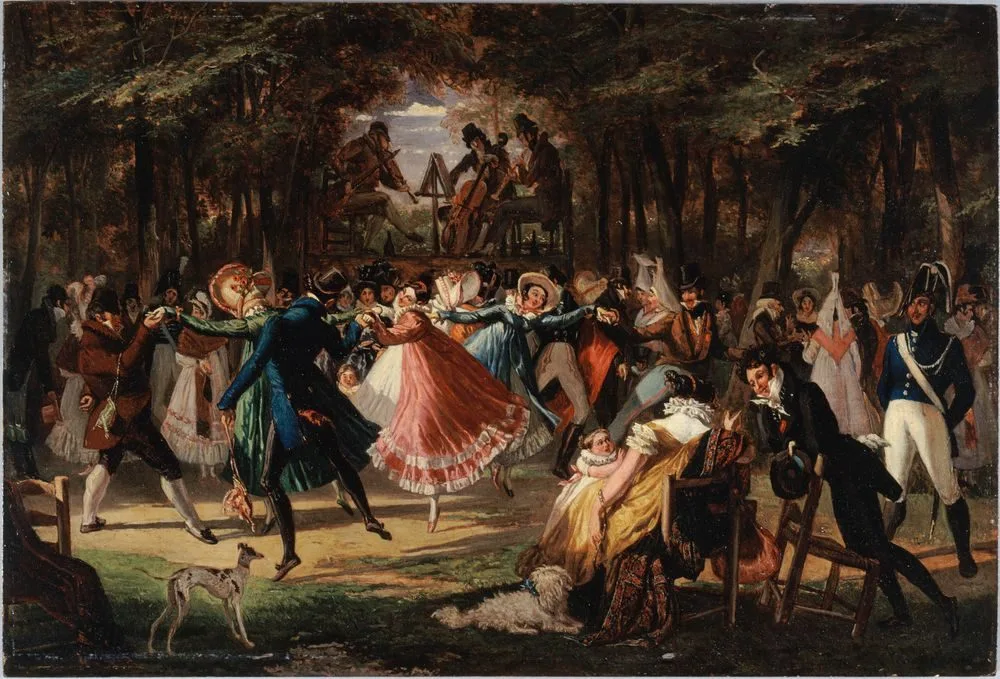
Paris, 1835 — a city being rebuilt around money
The Revolution had abolished the old aristocracy and Napoleon had gone; what filled the space was money, and Paris in the 1830s was the place to watch it happen. Fortunes were made in speculation and lost in a season, and the boarding houses of the Latin Quarter filled with young men from the provinces who had come to get in on it.
Balzac wrote about it as a man who had failed at business himself and was writing to pay creditors. The novel is where he first ran a character from one book into another, and the whole Comédie humaine — ninety-odd volumes of one society, seen from every floor of it — grows out of that decision.
On screen
5Film and television, earliest first.
- 1915 Père Goriot Travers Vale
- 1921 Father Goriot Jacques de Baroncelli
- 1926 Paris at Midnight E. Mason Hopper
- 1945 Father Goriot Robert Vernay
- 2004 Old Goriot Jean-Daniel Verhaeghe
Versions are listed where they are documented. A century of stage productions and most broadcasts were never catalogued at all, so this is what can be shown rather than everything that was ever made.