The Princess of Cleves
Madame de La Fayette · first published 1678
A novel of 1678 that French cinema keeps rewriting, most recently as a story about schoolchildren.
4 versions · 1961–2008 · screen, stage
Jean Delannoy filmed it in 1961 from a screenplay by Jean Cocteau; Manoel de Oliveira moved it to modern Portugal; Christophe Honoré put it in a Paris lycée as La Belle Personne in 2008. Few old novels are re-set this often, and none of the versions has to change what the story is about.
It is arguably the first psychological novel in any language: a woman does the correct thing for four hundred pages and is destroyed by it anyway, and the book declines to say she was wrong.
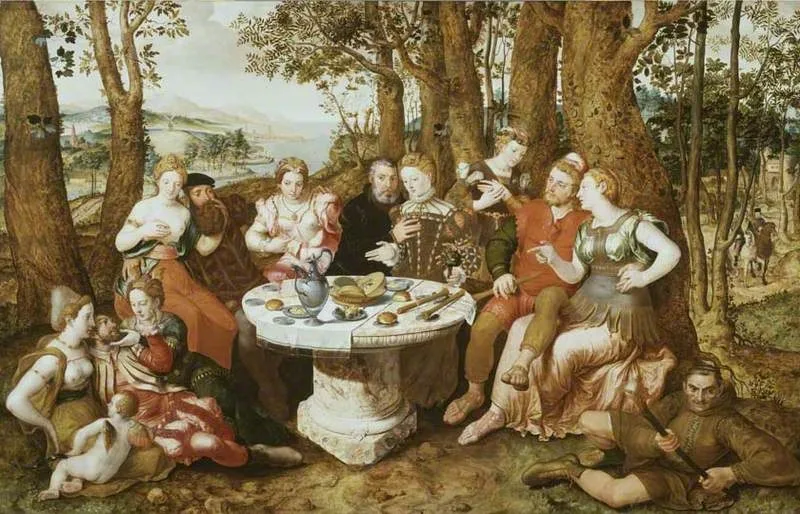
The court of Louis XIV, 1678
Madame de La Fayette set her novel a century in the past, at the court of Henri II, but everyone at Versailles understood what they were reading: a portrait of a court exactly like their own, in which nothing is private, everything is watched, and a reputation can be destroyed by a lost letter.
It was published anonymously — a woman’s name on a novel was still a liability — and set off a public argument, conducted in print, about whether its heroine had behaved correctly. That argument is arguably the first literary criticism of a novel in any language.
On screen
3Film and television, earliest first.
- 1961 La Princesse de Clèves Jean Delannoy
- 1999 The Letter Manoel de Oliveira
- 2008 The Beautiful Person Christophe Honoré
On stage
1Opera, musical theatre and ballet made from it.
- — La Princesse de Clèves Jean Françaix
Versions are listed where they are documented. A century of stage productions and most broadcasts were never catalogued at all, so this is what can be shown rather than everything that was ever made.